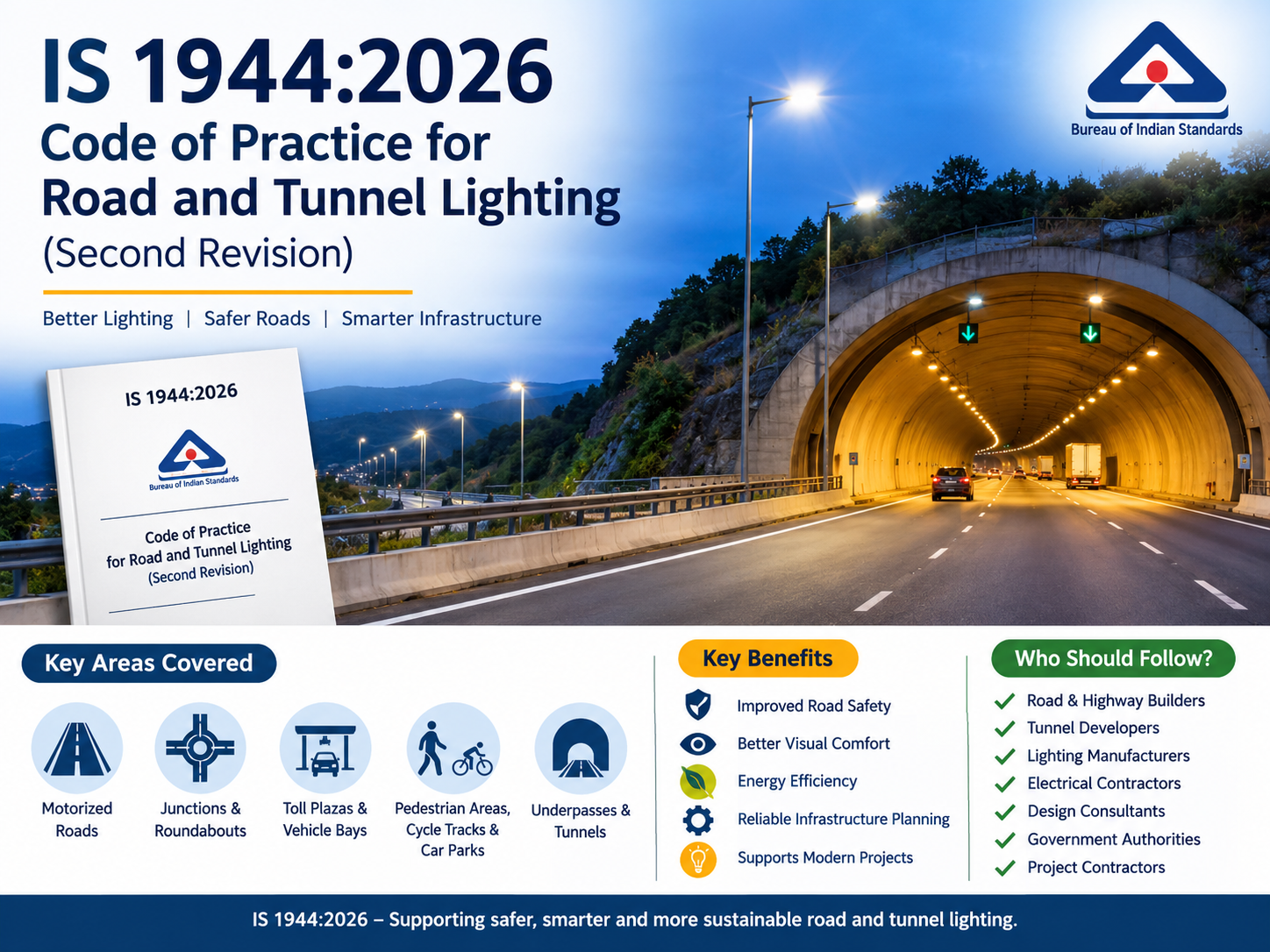
IS 1944:2026 – Code of Practice for Road and Tunnel Lighting (Second Revision) | BIS Standards & Compliance
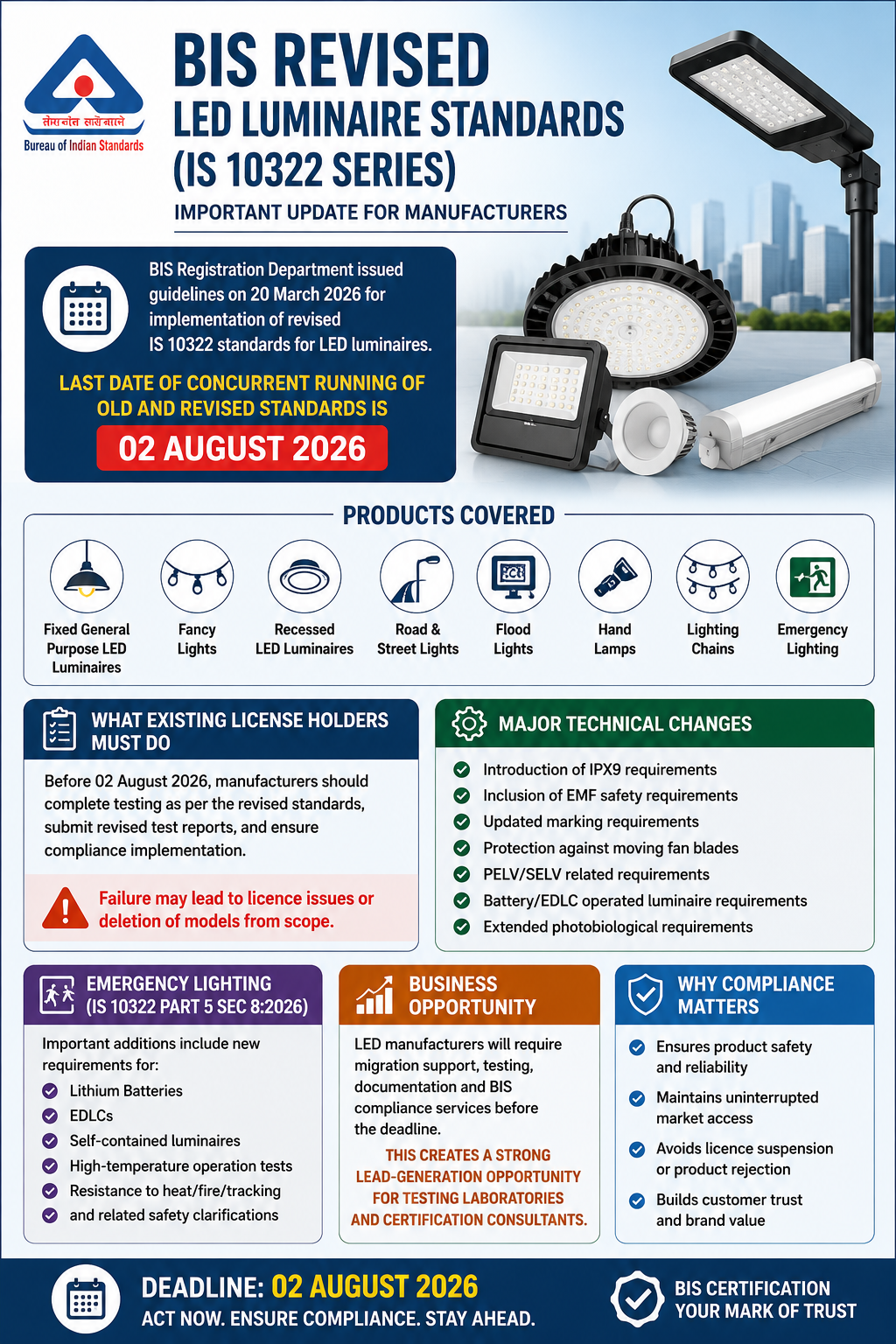
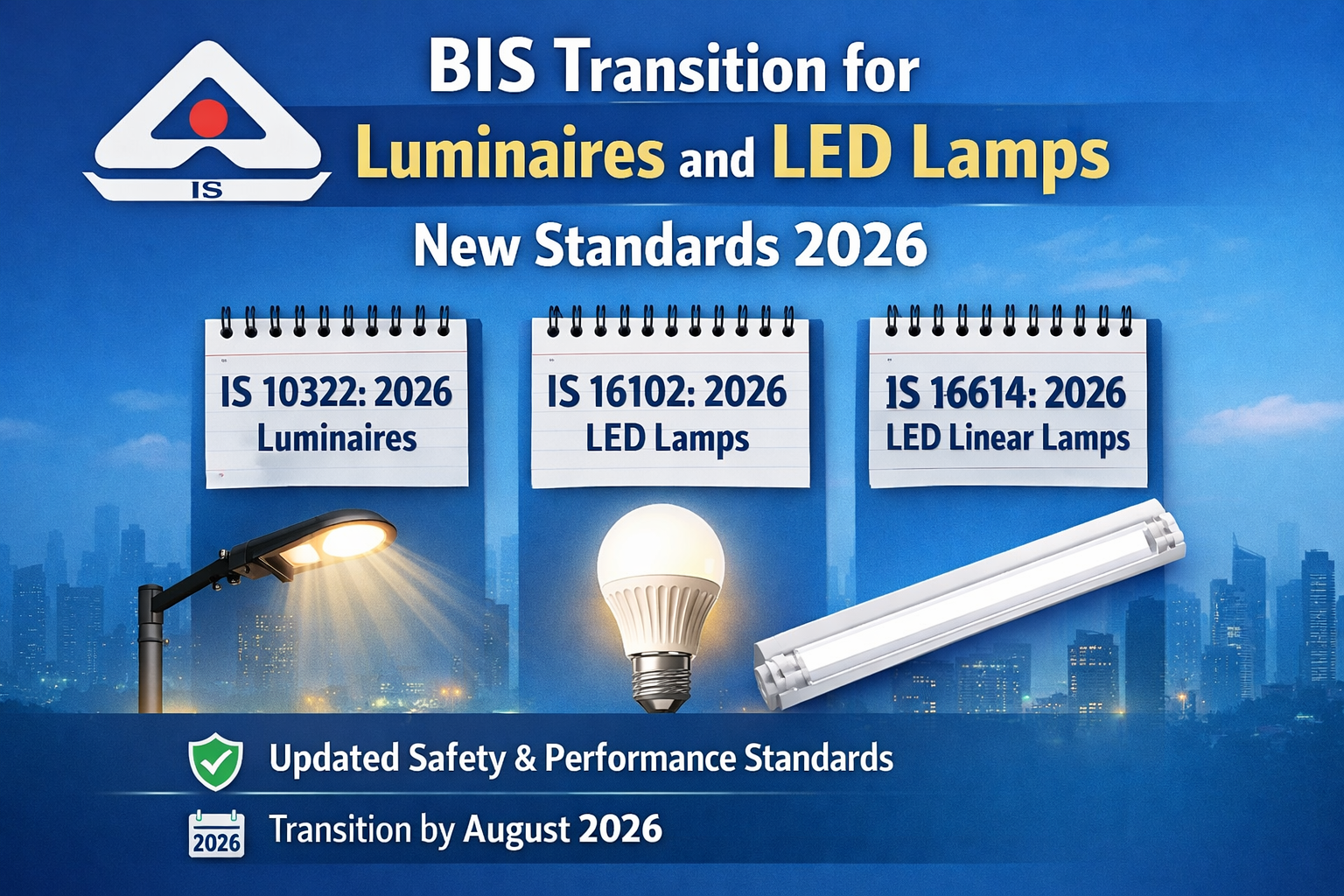
IS 1944:2026 – Code of Practice for Road and Tunnel Lighting (Second Revision) is an important Indian Standard that provides guidance for planning, designing, installing, and maintaining lighting systems for roads, highways, junctions, underpasses, and tunnels. Developed under the framework of the Bureau of Indian Standards (BIS), the revised standard addresses the changing requirements of modern road infrastructure, traffic movement, and energy-efficient lighting technology. Proper road and tunnel lighting is essential for improving visibility, supporting safer driving conditions, reducing glare, and helping drivers identify pedestrians, vehicles, road signs, and potential hazards. With the expansion of expressways, urban roads, elevated corridors, and underground infrastructure in India, updated lighting practices have become increasingly important. IS 1944:2026 is the second revision of the Code of Practice for Road and Tunnel Lighting. It consolidates guidance that was previously distributed across several parts of the earlier IS 1944 series. The revision reflects developments in road infrastructure, lighting design, LED technology, and electronic lighting control systems. The standard is relevant to engineers, infrastructure developers, lighting designers, electrical contractors, government authorities, project consultants, and companies involved in road and tunnel lighting projects. Its primary objective is to support suitable lighting design according to road conditions, traffic requirements, pedestrian movement, and the specific characteristics of each application. The revised standard brings together guidance for several important lighting applications. Road lighting design must consider factors such as traffic volume, vehicle speed, road layout, visibility, and uniform light distribution. Appropriate lighting helps drivers recognise obstacles and respond to changing road conditions. The design should also consider glare control and the visual comfort of road users. Road junctions, roundabouts, and merging or crossing points require particular attention because vehicles may approach from different directions. Suitable lighting can help drivers identify road markings, traffic signs, other vehicles, and pedestrians more clearly. Toll plazas and vehicle stopping areas require lighting suitable for vehicle movement, queuing, entry and exit points, and pedestrian activity. Effective lighting supports visibility for drivers and personnel working in these areas. Pedestrian pathways, cycling routes, and outdoor parking facilities require lighting that helps users navigate safely. Lighting design should consider the layout, movement patterns, potential obstructions, and visibility of surrounding areas. Underpasses and tunnels present specific lighting challenges because natural daylight can change sharply between the outside environment and the tunnel interior. The revised standard includes dedicated guidance for these applications, helping designers consider luminance, traffic conditions, and the visual adaptation of drivers. Major Changes in the Second Revision The second revision introduces a consolidated approach to road and tunnel lighting guidance. Key developments include: Consolidated standard: Guidance previously covered under multiple parts of IS 1944 has been brought together in one document. Modern road categories: Lighting considerations address different road types, layouts, traffic conditions, and infrastructure requirements. Luminance-based design: The revision introduces a greater focus on luminance concepts where appropriate, helping designers evaluate how road surfaces appear to drivers. LED and smart lighting technology: Modern solid-state lighting and electronic control systems provide opportunities for improved energy efficiency and lighting management. Expanded application coverage: The standard addresses motorized roads, conflict areas, pedestrian facilities, toll plazas, underpasses, and tunnels. Implementing appropriate road and tunnel lighting practices offers several benefits for infrastructure projects. Improved road safety: Adequate visibility helps drivers recognise obstacles, road geometry, and other road users. Better visual comfort: Appropriate lighting distribution and glare management can help reduce visual discomfort while driving at night. Energy efficiency: Properly designed LED lighting and suitable control systems can help reduce electricity consumption and operational costs. Reliable infrastructure planning: A structured lighting design approach supports consistent planning, installation, inspection, and maintenance. Support for modern projects: The standard provides useful guidance for highways, urban roads, transport infrastructure, and tunnel development projects. The revised standard is particularly relevant to: Road and highway construction companies Tunnel infrastructure developers LED streetlight and lighting system manufacturers Electrical contractors and installation companies Lighting design and engineering consultants Government departments and public infrastructure authorities Contractors participating in road lighting tenders Companies supplying lighting equipment for infrastructure projects Organisations involved in these activities should review the standard when preparing technical specifications, designing lighting systems, or responding to project tender requirements. Businesses and project stakeholders should begin by reviewing their existing lighting designs and technical documentation. The applicable requirements should then be assessed against the revised standard and the specific project specifications. A practical preparation process includes: Identify the road, junction, underpass, or tunnel lighting application. Review the relevant clauses and technical recommendations of IS 1944:2026. Assess lighting layouts, equipment specifications, and design calculations. Verify that the selected luminaires meet their applicable product standards and project requirements. Review tender conditions, testing documentation, installation practices, and maintenance procedures. Update technical documents wherever necessary. It is important to understand that IS 1944 is a code of practice for lighting design, rather than a standalone product certification standard. Product testing, BIS certification, and licensing requirements must be evaluated separately according to the applicable product standard, Quality Control Order (QCO), and regulatory scheme. Conclusion IS 1944:2026 – Code of Practice for Road and Tunnel Lighting (Second Revision) represents an important development in India's road lighting guidance. By consolidating earlier recommendations and addressing modern infrastructure and lighting technologies, the revised standard supports better planning for roads, junctions, pedestrian areas, underpasses, and tunnels. Manufacturers, contractors, infrastructure developers, and lighting consultants should review the updated standard to understand its technical recommendations and identify any changes needed in their projects. Before finalising a design or tender submission, consult the official BIS publication for the complete requirements and confirm the applicability of related product certification standards. Need assistance with BIS certification, product testing, or regulatory compliance? Consult an experienced compliance consultant to understand the applicable standards, testing requirements, and documentation for your lighting products and infrastructure projects.What Is IS 1944:2026?
Key Areas Covered Under IS 1944:2026
1. Lighting of Motorized Roads
2. Junctions, Roundabouts, and Conflict Areas
3. Toll Plazas, Bus Bays, and Truck Bays
4. Pedestrian Areas, Cycle Tracks, and Outdoor Car Parks
5. Underpasses and Tunnels
Benefits of Following IS 1944:2026
Who Should Consider IS 1944:2026?
How to Prepare for IS 1944:2026 Compliance